
Alcohol and Your Brain: What “Just One Glass” Really Does
Posted on April 21, 2026 by Tess Cheng
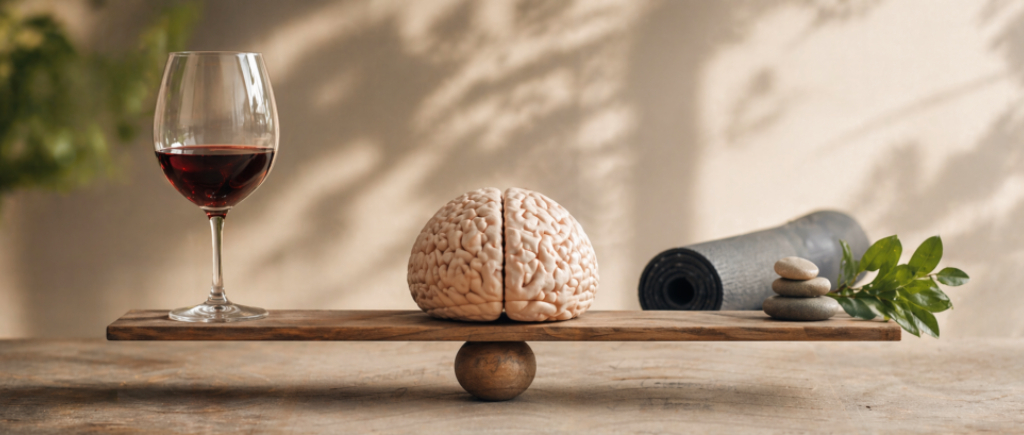
Alcohol is a bit of an overachiever.
It can make you feel relaxed and restless, confident and anxious, socially brilliant and… occasionally a little too honest. As a recent piece in The Guardian highlights, alcohol has this curious ability to lift mood in one moment and dip it in the next. It’s part of what makes it so appealing and also why it’s worth understanding a little more clearly.1
What’s happening inside your body and brain is far more interesting than “just a drink.”
The Brain on Alcohol: A Chemical Shortcut
Within minutes of your first sip, alcohol reaches the brain and begins adjusting the balance of key neurotransmitters, the chemical messengers that shape how you feel, think, and respond.2
Initially, the effects are exactly what most people are looking for. Dopamine and endorphins rise, creating that sense of ease and lightness. GABA, a calming neurotransmitter, increases, slowing things down just enough to quiet mental noise. Inhibitions soften, conversations flow more easily, and suddenly everything feels just a little more manageable.
This is why a drink can feel like a shortcut to relaxation or confidence.
Alcohol is also classified as a depressant. After that initial lift, the brain begins working to restore balance. Dopamine levels can dip, stress systems rebound, and the relaxed, sociable feeling may gradually shift into irritability or anxiety further down the line. Rather than simply elevating mood, it tends to move it in both directions over time.3
Why It Feels So Good… Until It Doesn’t
Alcohol works so effectively because it taps directly into the brain’s reward system. It creates a temporary sense of relief, connection, and emotional ease.
The challenge is that this effect doesn’t last.
As the body processes alcohol, the brain compensates for those initial changes. Over time or even within the same evening, this can lead to a noticeable dip in mood. Many people recognize this as that slightly uneasy feeling that can appear after a few drinks, or the familiar “hangxiety” the next day.4
It can become a subtle cycle: using alcohol to take the edge off, only to find that the edge returns a little sharper afterwards.
None of this makes alcohol “bad”. It simply makes it powerful.
The Sleep Illusion
Alcohol has a reputation as a sleep aid, but it’s more of a convincing illusion than a reliable solution.
It often helps you fall asleep faster, which is why it can feel effective. But as the night progresses, sleep becomes lighter and more fragmented. Deep sleep and REM sleep, both essential for cognitive function and recovery, are reduced.5
The result is a night that looks like sleep on the surface but doesn’t quite deliver the restoration your brain and body need.
What About the Body?
While the brain tends to steal the spotlight, the rest of the body is quietly working overtime too.
In the short term, alcohol dehydrates, slows coordination, and affects decision-making. These are the familiar, immediate effects most people recognize.6
With repeated or heavier drinking, the impact becomes more systemic. Blood pressure can rise, the liver takes on a greater load, and low-grade inflammation can increase. None of this happens overnight, but it does build gradually.7
Again, this isn’t about creating concern. It’s about awareness.
The Real Question Behind the Drink
One of the most useful shifts in thinking is moving away from “Should I drink?” and toward a more interesting question: “What am I looking for right now?”
Because people rarely drink at random.
Sometimes it’s about relaxing after a long day. Sometimes it’s about feeling more at ease socially, celebrating, or simply creating a moment of pause. Alcohol delivers a quick and noticeable change in state, which is exactly why it’s so widely used.8
It isn’t the only way to achieve that shift.
Other Ways to Change Your State
If the goal is to feel different whether to unwind, reset, or lift your mood, there are other approaches that don’t come with the same aftereffects.
Movement, for example, is one of the most reliable ways to influence brain chemistry. Even a short walk can shift mood more than expected. Time in nature has a similar effect, often calming the nervous system.
Social connection, when it isn’t dependent on a drink in hand, tends to feel more grounding. Creative activities, whether that’s music, writing, or cooking, can create a sense of flow that many people are actually seeking when they pour a glass.
Even small shifts, like alternating alcoholic drinks with non-alcoholic ones, are becoming more common as people look to enjoy the moment while still feeling good the next day.9
Ultimately, most people aren’t chasing alcohol itself. They’re chasing a feeling.
A More Useful Takeaway
Alcohol isn’t purely helpful or harmful, it’s simply effective. It changes brain chemistry quickly, which is why it can feel so reliable in certain moments.
Understanding that effect creates a different kind of choice.
Rather than drinking out of habit, it becomes possible to notice what it’s doing in real time, how it feels in the moment, how it feels later, and how it carries into the next day.
A Simple Pause That Changes Everything
The next time you reach for a drink, take a brief moment to check in with yourself. What are you actually looking for? Is it relaxation, connection, or a shift in energy?
That small pause can bring clarity. Sometimes a drink will feel like the right choice. Other times, something else may meet that need more effectively and leave you feeling better afterwards.
This isn’t about rules or drastic change. It’s a quiet invitation to understand the effect, make more intentional choices, and expand the ways you create the states you want to feel.
References
- https://www.theguardian.com/lifeandstyle/2026/apr/07/alcohol-mood-effect-mind-body
- https://www.irishtimes.com/health/your-wellness/2026/02/18/what-are-the-effects-of-alcohol-on-the-body/
- https://www.addictioncenter.com/alcohol/is-alcohol-a-depressant/
- https://www.theguardian.com/commentisfree/2025/nov/10/anxiety-take-moment-pause-before-pouring-glass-of-wine
- https://www.foodandwine.com/how-does-alcohol-affect-your-sleep-11950467
- https://www.dignityhealth.org/articles/effects-of-alcohol-on-the-body-mind-and-mood
- https://www.irishtimes.com/health/your-wellness/2026/02/18/what-are-the-effects-of-alcohol-on-the-body/
- https://www.irishtimes.com/health/your-wellness/2026/02/18/what-are-the-effects-of-alcohol-on-the-body/
- https://www.businessinsider.com/gen-z-redefining-drinking-culture-zebra-striping-skip-hangovers-2026-1
